The short answer
A city seed needs more than one settlement, and none of our 49 seed records names two. The word city appears in exactly two records: one is an ancient city under a mountain, the other is a finder's opinion that an island suits waterside city builds. Neither one is a city.
- 2 of 49 records contain the word city. One is a structure underground, one is a verdict about a shoreline. 2 of 49 0 are settlements
- 2 of 49 records name a village.
2016000in the coordinate table and-7492801512473941435on an archive card. 2 villages - 8 of 49 name a pillager outpost, and 7 of those 8 come from one posting batch. That is one observation repeated, not eight findings. 8 outposts 7 from one batch
- 0 of 49 name a village and an outpost in the same entry. One settlement per record is the ceiling of this archive. 0 clusters no second settlement anywhere
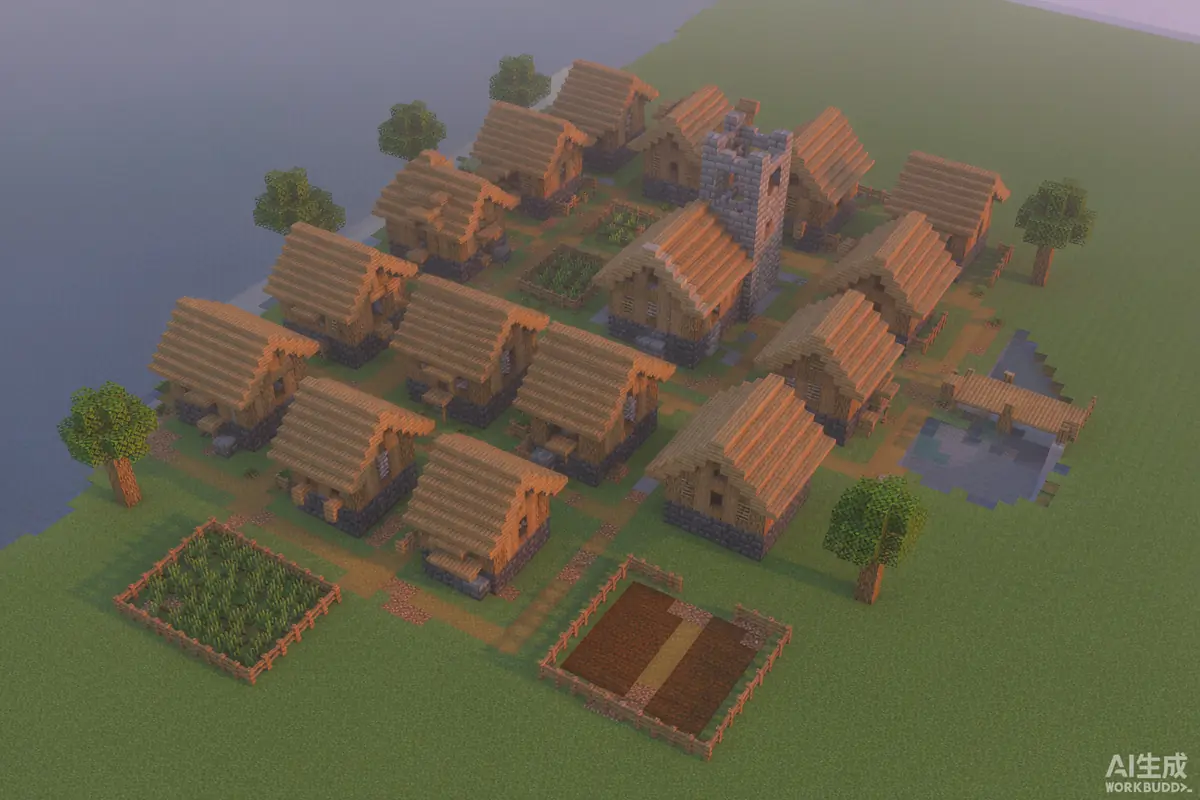
- 1 of 49 has a settlement you can walk to and look inside. Twelve houses, two blacksmith forges, one church and two farms at
-24, 64, 12, about 27 blocks from spawn. 1 usable core Java row only
The word does two different jobs
Search for a city seed and you will land on pages written for two different requests, and neither of them is the request the word suggests.
The first job is a cluster. Some seed indexes sort villages by how many sit on top of each other — double villages, triple villages, quadruple villages, each with its own counted list. The promise there is not one big town, it is four ordinary villages close enough that the gaps between them are worth building over. That is the meaning of city that most people arrive with, because it is the only one a seed can actually deliver.
The second job is a structure. An ancient city is a single underground complex with a warden in it. It has doors and corridors and a lot of deep dark around it, and nobody lives there. Calling it a city is the game's own naming, and it has nothing to do with the thing you build on the surface.
Our archive can answer the first job honestly and the second job only partly, and both answers start with a count rather than a code.
The word, counted
Across all 49 records — twenty rows in the coordinate table plus twenty-nine archive cards — the word city appears in two of them. Here they are, with the sentence that carries it.
| Record | Where it lives | Version on the record | The sentence | Why it is not a city |
|---|---|---|---|---|
6390326396262027557 | Table row 19 | Java 1.18+ and Bedrock 1.18+ | Mountain island, rich initial resources, underground ancient city with warden | The city is underneath you and it is a structure, not a settlement. Row 19 gives no coordinate at all, so even the mountain is a description rather than a place. Ancient city Rejected: no coordinate |
336263053901983088 | Archive card, 17 January 2012 | Minecraft 1.1 | Large island in a vast ocean — called perfect for waterside city builds | This is a verdict about a shoreline, written by the finder. The card has no coordinate, so the shoreline the sentence praises is not a point you can walk to. City build verdict No coordinate 2012 code, not re-tested |
Two records, two completely different things, one shared word. If you count “our archive mentions cities twice” and stop there, you get a number that sounds like coverage and is actually a coincidence of vocabulary.
The second row deserves one more sentence, because it is the closest thing in this archive to a real city-seed claim. Somebody stood on that island in 2012, looked at the water, and decided it was good ground for a city. That is exactly the judgement you want from a seed page. What they did not write down is where the island is, and the card also has no platform field, so there is no way to tell which generator produced it.
Settlements counted, one per record
Villages and outposts are the only two structures in this archive that people live around. Both were counted separately, and the answer to “how many records name two of them” is the one that decides whether a city page is possible at all.
| What was counted | Records | Which ones | What is missing |
|---|---|---|---|
| Names a village | 2 of 49 | 2016000 (table row 1) and -7492801512473941435 (card, 26 July 2013) | Neither record names a second village, and only one of the two has a version field. |
| Names a pillager outpost | 8 of 49 | Table rows 7 to 13, all posted on 19 May 2023, plus -1881547168 (card, 9 September 2019, Java 1.14) | An outpost is a tower and a pen, not a grid of houses. Seven of the eight rows are the same author's server set, so they are one survey, not seven. |
| Names a village and an outpost in the same record | 0 of 49 | — | This is the number that blocks a city page. With one settlement per record there is no pair to measure, so no record can tell you how far apart two settlements sit. |
| Gives the size of any settlement in blocks | 0 of 49 | — | The word blocks does not appear in a single record. Every settlement size in this archive is an adjective or a house count, never a measurement. |
| Gives a village coordinate | 1 of 49 | 2016000: village at -24, 64, 12, spawn at 0, 63, 0 | The card for -7492801512473941435 carries x=-400, z=280, but it lists four features and does not say which one that pair marks. |
| Describes the inside of a settlement | 1 of 49 | 2016000: twelve houses, two blacksmith forges, one church, two farms | That interior line is the entire vocabulary of settlement detail in the archive. Forty-eight records say nothing about what is inside. |
Read the third row and the fourth row together and the shape of the problem is clear. A city is a relationship between settlements, and this archive holds settlements one at a time. We can tell you a village exists. We cannot tell you there is another one nearby, because not one record ever wrote two down.
The one settlement you can walk to and look inside
2016000 is table row 1, recorded for Java 1.20 to 1.21. Spawn is 0, 63, 0. The village sits at -24, 64, 12, which is 24 blocks along one axis and 12 along the other.
The distance is not on the record. The row gives two coordinates and no distance word. The 27 blocks on this page is our own arithmetic — the straight line between the two points, worked out from the coordinates the row supplies, not a number the original tester wrote down.
What makes this record the only usable core in the archive is not the distance. It is the interior line: twelve houses, two blacksmith forges, one church and two farms. Twelve is the highest house count anywhere in the 49 records, because it is the only house count anywhere in the 49 records. Every other settlement in the archive is referred to as a village and then left alone.
| Field | What the record says | What that gives you for a city |
|---|---|---|
| Spawn | 0, 63, 0 | A known zero point to measure from |
| Village | -24, 64, 12 | A centre point, about 27 blocks out, that you can reach before the first night |
| Interior | 12 houses, 2 blacksmith forges, 1 church, 2 farms | Twelve buildings to build around instead of twelve to build |
| Stronghold | -21, 42, 18 | A second point almost under the village, on a different Y level |
| Diamonds | -32, 11, 25 | The only deep coordinate on the row |
| Edition split | Java row has the village; the Bedrock row for the same code records ocean, a shipwreck, a mushroom island and a monument | The core is a Java core. On Bedrock this code gives you water. Bedrock row: no village |
Village at -24, 64, 12 with twelve houses, two forges, one church and two farms · Java 1.20–1.21: 2016000
The Bedrock half of that table is the part most city lists would leave out. The same code appears twice in our table, once from each edition's point of view, and the two rows describe different worlds: a spawn with a village on Java, open ocean with a mushroom island 300 blocks west on Bedrock. A single code is not a single map, and a city plan built on the wrong row starts in deep water.
The closest thing to a cluster we hold
If a city needs several things close together, then the record with the most things close together is -7492801512473941435, posted 26 July 2013. Its terrain line reads: desert pyramid, NPC village, two surface spider dungeons linked together, jungle with bays at the desert edge. The note underneath says a village and a pyramid inside the same short walk makes the spawn genuinely overpowered.
That is four features in one entry, and a village is one of them. It is still not a cluster, for three reasons that are all visible on the card itself.
- One settlement, three other structures. A pyramid and two dungeons are not places people live. The settlement count on this card is one.
- The distance is a phrase, not a number. “The same short walk” is the whole measurement. Nothing on the card converts it into blocks, and no coordinate pair belongs clearly to the village.
- There is no version field. The card lists the date, one coordinate pair and the terrain line. No Java version, no platform. There is nothing on it to check against a current generator. Village + pyramid Two dungeons No version Distance not recorded
Compare that with the eight outpost records and the contrast is useful. Those rows give exact coordinates — 600, 200 / -225, -325 / 350, 350 — for a structure that is not a settlement. So this archive is precise about outposts and vague about villages, which is the opposite of what a city page needs.
Four checks before you call a record a city seed
This is the standard we now apply to our own archive, and it is a fair standard to apply to any page that offers you a city seed. A record has to pass all four to be worth the name.
| Check | Why it matters | Our archive |
|---|---|---|
| 1. Does it name a settlement at all? | Without a settlement there is nothing to build around, only scenery. | 2 of 49 name a village; 8 name an outpost. |
| 2. Does it name a second settlement within a stated distance? | This is the cluster claim. One settlement is a village; two within reach is a city site. | 0 of 49. No record contains two settlements. |
| 3. Does it give a footprint in blocks? | Twelve houses is not an area. Without a footprint you cannot plan streets, walls or a harbour. | 0 of 49. The word blocks never appears in a record. |
| 4. Does it give the settlement's own coordinates? | A village you cannot walk to is a rumour. | 1 of 49, on 2016000. |
Our best record passes check one and check four and fails check two and check three. That is the entire honest status of city seeds on this site: one reachable village with a written interior, and no second settlement anywhere in forty-nine records to put next to it.
Use the same four checks on any list you find. If a page shows you a code and a distance to one village, it is a village page. If it shows a cluster, ask where the second village's coordinates are — a list that counts double or quadruple villages must be holding the coordinates of both.
First day on the one record that has an interior
The plan below only uses what row 1 actually records. Where it steps past the record, it says so.
- Walk the 24 and the 12 before you build anything. The village is 24 blocks along one axis and 12 along the other from
0, 63, 0. If you put a starter hut at spawn, you are building in the gap between your base and your materials. - Count the houses yourself. Twelve is what the record says, and the record is one tester's description of a generated world. If you count eleven, the record is old rather than wrong, and the count you make is the one to plan with.
- Treat the two farms as infrastructure, not loot. They are the only food the interior line names, and a city that eats its own farms on day one has nothing to build on tomorrow.
- Use the church as the vertical anchor. It is the one building on the row that is taller than the houses, which makes it the only landmark you can find again without a map. This is our reasoning, not a recorded fact.
- Do not plan the layout on the stronghold. It sits at
-21, 42, 18, close to the village on the horizontal axes and 22 blocks lower in Y. It is a second point to dig from, not a street to build along. - If you are on Bedrock, stop here. The Bedrock row for this code records ocean at spawn and no village at all. The first-day plan for that row is the survival-island one, which is a different page.
If several of you are laying out the same streets on one map, the host matters more than the code. Shockbyte is a low-cost Minecraft host that sets up in minutes, and code LAUNCH takes 25 percent off the first month. If you sign up through that link I may receive a commission at no extra cost to you, and it does not change what you pay.
What we will not claim
- We will not publish a city seed. We do not have one. The one record with a walkable village also has the only coordinates, and it has no second settlement within any stated distance, so a city code from this archive would be a village code with a bigger word on it.
- We will not call the ancient city a city you can live in.
6390326396262027557has a warden under a mountain, and the row gives no coordinate for either. It is a structure, and it is a good one, but it is not a place to put houses. - We will not dress up 336263053901983088 as a city build seed. The sentence on that card is a finder's opinion from 2012 with no coordinate attached. We quote it because it is the only city verdict in the archive, not because it is usable.
- We will not count seven outpost rows as seven findings. They were posted as a set on one day by one author. Seven rows, one survey.
- We will not turn “the same short walk” into a number. It is the phrase the 2013 card uses, and 2013 is not a version field. Guessing a distance for it would make the archive look more complete than it is.
Where the rest of this data lives
The village layer is spread across several pages, and each one owns a different question. These are the ones worth opening next:
Village seeds · What is inside a village · Desert villages · Mushroom villages · Large island seed · Archipelago seeds · The 2011–2019 archive · Rare seeds
Two of those links answer questions this page deliberately left alone. The blacksmith page takes the twelve-house village apart building by building, and the large island page covers the record whose finder called it good for a waterside city. If your actual problem is an island with almost nothing on it, the when to quit page is the one that tells you how long that start lasts.
Frequently asked questions
Is there a city seed in Minecraft?
No, not as a single code you type into the seed box. Minecraft generates villages - a well, a dozen or so houses, farms and paths between them - and that is the largest settlement the game builds on its own. A city is something you build, or a cluster of villages you find and connect. Neither of those is a property of a seed code, which is why lists of city seeds are really lists of village spawns.
How many of your records mention a city?
Two of forty-nine, and neither one is a city. Row nineteen of the coordinate table is 6390326396262027557, a mountain island with an ancient city underneath it - that is a structure with a warden in it, not a place with houses. The other is the archive card for 336263053901983088 from January 2012, whose note says the finder called it perfect for waterside city builds. That is an opinion about the shoreline, written by someone who did not give a coordinate.
Which of your records has the most houses?
2016000, with twelve. It is the only record in the archive that says anything about the inside of a settlement: twelve houses, two blacksmith forges, one church and two farms at -24, 64, 12, with spawn at 0, 63, 0. The other village record, -7492801512473941435, says a village and a desert pyramid sit inside the same short walk and gives no house count at all.
Can you give me a seed with two villages close together?
No, and this is the honest reason: zero of our forty-nine records name two settlements in the same entry. Two records name a village and eight name a pillager outpost, and no single record names both. We know the distance between a village and a spawn on exactly one record, so a distance between two villages is not a number we can produce for any code.
Which record comes closest to a village cluster?
-7492801512473941435, posted 26 July 2013. Its terrain line lists a desert pyramid, a village, two surface spider dungeons sharing a wall, and jungle bays at the desert edge - four features described as being inside the same short walk. It has one coordinate pair, x=-400, z=280, and the card does not say which of those four features it marks. It also has no version field, so there is nothing on the card to check it against a current version.
Does the village on 2016000 work on Bedrock?
No, not in the record layer. The same code appears twice in our table, and the two rows disagree: the Java row has spawn at 0, 63, 0 with a village at -24, 64, 12, while the Bedrock row records spawn in open ocean at 0, 62, 0, a shipwreck at 0, 58, 120, a mushroom island at -300, 64, 0 and a monument at 0, 40, -400. The Bedrock row names no village at all. If you are on Bedrock, the city core on this page is not there.