The short answer
One code in this archive mentions an ancient city: 6390326396262027557, a mountain island filed for Java and Bedrock. The record names the structure in one clause and gives no coordinate for it — no entrance, no depth, no distance from spawn.
- 1 of 49 records contains the word ancient, and the same record is the only one that contains the word warden. 1 of 49 no second source
- 0 coordinates in that record's coordinate cell. The column that should hold a location holds a sentence. No /tp target
- 8 words for the inside of an ancient city appear 0 times in all 49 records: deep dark, sculk, shrieker, sensor, catalyst, reinforced deepslate, echo shard, swift sneak. 0 of 49
- 1 of 49 records carries a version range starting at 1.19 or later, the update that added the structure, and that record has no ancient city in it. Floor is 1.18+
- 5 rows share one filing date and one source, and this is one of them: one survey, not five finds. Same-day batch
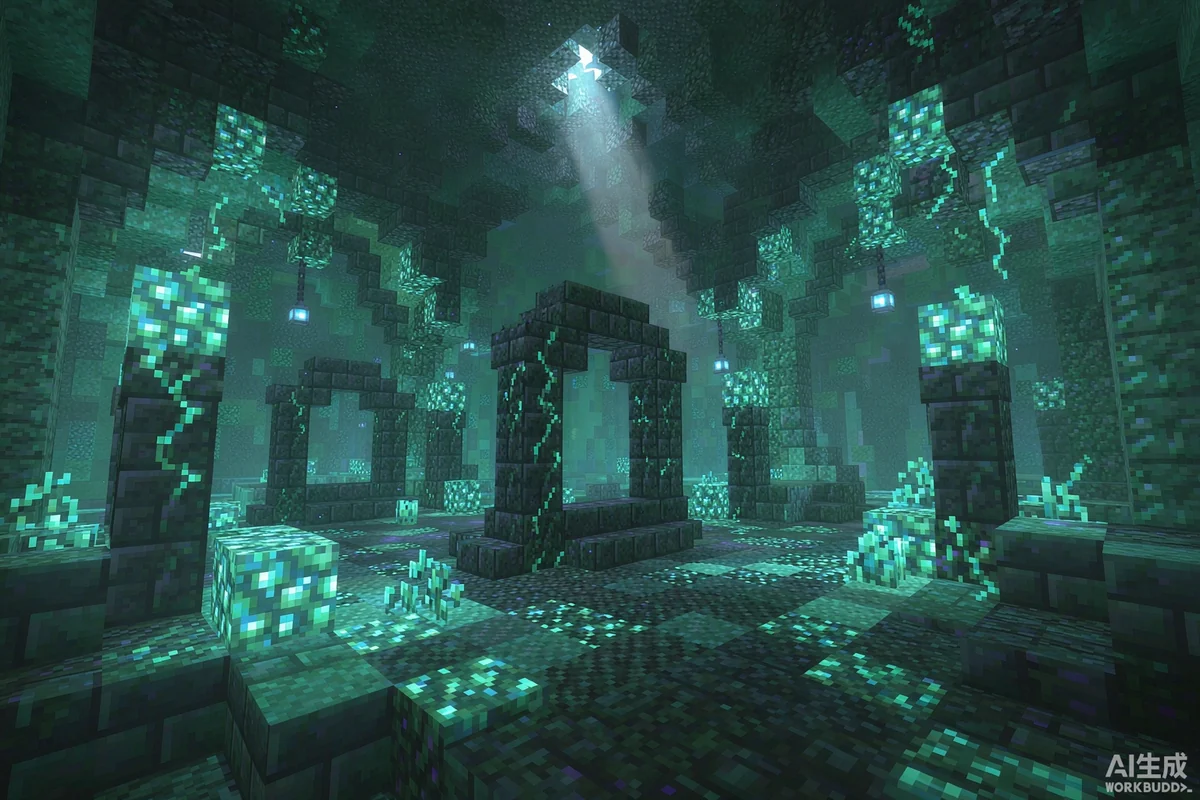
Ancient City Island — 6390326396262027557 Ancient city Warden below Java + Bedrock No coordinate Version floor 1.18+
The record, field by field
The row has nine columns. Eight of them carry something a player can use. The ninth is the one that carries the location, and it is the only column on the row with no digits in it.
| Column | What it says | What it is worth at a seed box |
|---|---|---|
| Name | Ancient City Island | The finder's label, not a name the game uses. Useful as a filing tag and nothing more. |
| Seed code | 6390326396262027557 | A number, not a word name, and inside the signed 64-bit range, so a Bedrock seed box accepts it as typed. |
| Key coordinates | Mountain island, rich initial resources, underground ancient city with warden | Zero digits. The description sits in the coordinate column because there was no coordinate to put there. |
| Java version | 1.18+ | A floor, not a tested build. Ancient cities arrived in Java 1.19. |
| Bedrock version | 1.18+ | The same floor. Bedrock received the structure in 1.19.0. |
| Edition | Java + Bedrock | Names two platforms and reports no run on either. No record in the archive says which edition was loaded. |
| Filed | 2025-04-13 | A filing date, not a test date, shared with four sibling rows from the same source that day. |
Two of those lines matter more than the rest. The coordinate column is empty in the only way that counts: a player who opens the code gets a world, not a destination. And the edition column is a pair of platform names with no result attached to either one, which is the difference between a claim and a test.
One sentence, three claims
The coordinate cell contains three separate claims and no number:
- Mountain island — a terrain shape. It tells you the ground rises, and it is the one claim on the row a player can confirm in the first thirty seconds.
- Rich initial resources — a judgement. It does not say wood, stone, food, iron or fuel.
- Underground ancient city with warden — a structure, and the only claim here that a coordinate could have made checkable.
The archive uses the word rich twice in 49 records, and only one of those two rows pays for it. Row seventeen says resource-rich and then itemises: dense trees, animals, and a cave with redstone, diamonds and a lava lake. Row nineteen says rich initial resources and itemises nothing.
| Record | The word | What follows it | Itemised features |
|---|---|---|---|
Row 17, 354089350 | Resource-rich island | dense trees + animals, cave with redstone + diamonds + lava lake | 4 Itemised |
Row 19, 6390326396262027557 | Rich initial resources | ancient city with warden | 0 Not itemised |
That is not a knock on the finder. It is the reason this page cannot promise a comfortable island: the same sentence that hands you a structure with a warden in it declines to say whether a tree is standing on top of it.
The version floor is older than the structure
Ancient cities arrived with Java 1.19 and Bedrock 1.19.0, both parts of the Wild Update in June 2022. Both version columns on this row say 1.18+, which is a floor a full release earlier than the thing the row is named after.
On Bedrock the deep dark appeared in preview builds before 1.19.0 shipped it to every player, and that is exactly why the label is ambiguous rather than false. 1.18+ can mean the finder was running a preview with the feature switched on, or it can mean the finder read a changelog and wrote a floor. The archive cannot tell those two apart, because no record in it carries the word tested.
| Java version on the row | Rows | Does the range reach 1.19? |
|---|---|---|
| 1.18+ | 12 | Yes, but the floor sits below it. Ambiguous |
| 1.18–1.21.2 | 1 | Yes, as an upper bound. Ambiguous |
| 1.20–1.21 | 1 | Starts after the structure existed. Version-safe |
| 1.15 | 1 | No. Pre-structure |
| Empty | 5 | No version to check. No floor |
Exactly one range in the twenty rows starts at 1.19 or later, and it belongs to row one, 2016000. That row names a village, a stronghold, diamonds and two temples. It does not name an ancient city. The archive's one version-safe record is not the record with the structure in it, which is the cleanest way to say that our data has a hole in it rather than a backlog.
Eight words that never appear
An ancient city is not one object. It is a set of blocks and rooms, and the archive has none of the vocabulary that would describe them. Eight terms, searched across all 49 records, return nothing.
| Term | Records containing it | What its absence costs you |
|---|---|---|
| deep dark | 0 | No record names the biome the structure sits in. |
| sculk | 0 | No record names the blocks that make the floor. |
| shrieker | 0 | No record says whether the thing that calls the warden is there. |
| sensor | 0 | No record says how loud the approach is. |
| catalyst | 0 | No record says whether the sculk is still spreading. |
| reinforced deepslate | 0 | No record mentions the frame at the centre. |
| echo shard | 0 | No record names a single item you can carry out. |
| swift sneak | 0 | No record names the enchantment the place is famous for. |
Two related words do appear, and neither helps. Warden appears once, on this row, and it tells you something can kill you. Chest appears in two records, on rows and cards that have nothing to do with this structure, so the archive has never counted a chest inside an ancient city. What is left is a name and a warning, with no inventory in between.
What a record needs before you dig
This is the standard we hold our own rows to, written down so you can apply it to any ancient city seed you find anywhere, including the ones with a video attached.
| # | Check | Why it decides the trip | This record |
|---|---|---|---|
| 1 | A code you can type | A word name is not a seed. 44 of the 49 codes here are numbers and 5 are word names. | Pass Numeric |
| 2 | The edition that was actually loaded | Java and Bedrock do not generate the same world from the same code, so a claim needs a platform. | Fail Names two, reports neither |
| 3 | A version at or after 1.19 | Below it, the structure is not in the game, whatever the row says. | Fail 1.18+ |
| 4 | A coordinate or a Y value | Without one, the trip is a search, not a visit. | Fail Zero digits |
| 5 | Distance from spawn, or both points | Decides whether you can walk there on day two or need a boat and a bed. | Fail Not computable |
| 6 | One line about the inside | Chests, shriekers, a broken wall: the difference between a target and a rumour. | Fail One word: warden |
One pass out of six. That is the verdict, and it is why the code sits on this page as a mention rather than on the coordinate table as a destination. Rejected as a target Kept as a mention
The first night, and the order of work
An ancient city is not a day-one target on any seed, and this record does not pretend otherwise. The structure sits at the bottom of the world, the biome around it is dark, and the one mob in it is the hardest thing in the game to survive by accident. None of that is a reason to skip it; it is a reason to arrive with iron, food, wool and a plan for noise.
The record does give one useful agreement. It calls the surface a mountain island, and the official 1.19.0 notes describe the deep dark as buried underground, especially at the bottom of mountainous regions. Terrain and structure condition point the same way, which is more than most rows in this archive manage.
What it does not give is a surface you can plan a first night on. No tree, no animal, no crop, no fuel, no ore. The one ease claim, rich initial resources, is the sentence we already took apart. So the order of work is the ordinary island order: wood first, then food, then stone, then iron, and only then a shaft down with wool between you and anything that listens. The after day ten page covers what changes once the island is safe and the trip becomes possible.
The same code on two editions
The edition column says Java + Bedrock, and that phrase is doing more work than the row can support. Seven of the twenty table rows carry the same pair of platform names, and none of the 49 records contains the words test, tested, verified, checked or loaded. In this archive, Java + Bedrock means the finder believed the code belonged to both editions. It does not mean anyone opened it twice.
The code itself survives the trip across the seed box. 44 of the 49 codes here are numbers and 5 are word names, and every numeric one sits inside the signed 64-bit range, so a Bedrock box accepts it exactly as written. That is a statement about typing, not about terrain. Whether the mountain island and the ancient city appear on your build is the question the record was never asked.
If you plan to dig this one with other people, the host matters more than the code. Shockbyte is a low-cost Minecraft host that sets up in minutes, and code LAUNCH takes 25 percent off the first month. If you sign up through that link I may receive a commission at no extra cost to you, and it does not change what you pay.
What we will not claim
- We will not give you a coordinate. There is none on the row, and inventing one would be worse than the gap.
- We will not give you a depth. No Y value, no cave mouth, no estimate.
- We will not count chests or name loot. The archive has never counted a chest inside an ancient city.
- We will not say how many ancient cities this seed has. One record mentions one structure. The seed may hold more, and we have no field that would know.
- We will not say it still works on the current version. No code in this archive has been re-run since the version numbering changed, and this row has not been loaded at all.
- We will not call it verified. It is a record, filed once, by one source, on a day when four other rows were filed too.
The city page explains why an ancient city is a structure and not a settlement; the Bedrock checklist turns the six checks above into a routine; the survival on Bedrock page covers the first ten days that this record never describes; and the rare seeds page lists this row as one of eight features that appear exactly once in the archive.
Frequently asked questions
What is the ancient city seed for Bedrock?
6390326396262027557 is the only code in this archive that mentions an ancient city, and it comes with no coordinate. The record describes a mountain island with an ancient city underneath it and a warden in it, is filed for both Java and Bedrock, and gives no /tp target for the island, the entrance or the structure. If you need a place to dig, this record cannot supply one; if you need a code the archive believes has the structure in it, this is the one.
Does 6390326396262027557 work on Bedrock?
We do not know, and the record does not know either. Its edition field says Java + Bedrock, which names two platforms without recording a run on either, and none of the 49 records contains the words test, tested, verified, checked or loaded. What we can say is smaller: the code is a number inside the signed 64-bit range, so a Bedrock seed box accepts it as typed. Whether the mountain island and the ancient city appear on your build is untested here.
Which Minecraft version do ancient cities need?
Java 1.19 and Bedrock 1.19.0, the Wild Update of June 2022. This record's version columns say 1.18+ on both sides, which is a floor that admits versions released before the structure existed. Bedrock preview builds carried the deep dark earlier, which is why the label is ambiguous rather than false.
How deep is the ancient city on this seed, and how do I find it?
We cannot tell you, because the record has no Y value and no coordinate of any kind. The official 1.19.0 notes describe the deep dark as buried underground, especially at the bottom of mountainous regions, and this record does describe a mountain island, so the terrain word and the structure condition agree. That is a reason to look under the mountain, not a location.
Do you have a sculk or warden seed?
A warden, yes, on the same single record: the word appears once in 49 records, inside the phrase underground ancient city with warden. Sculk, no: sculk, shrieker, sensor, catalyst, reinforced deepslate, echo shard and swift sneak appear zero times across the whole archive, so nothing here describes the inside of the structure, its chests or its blocks.
Is it worth starting an island world just for the ancient city?
No, not on day one. The same record that names the structure names no tree, no animal, no crop and no fuel, so the surface is as unverified as the underground, and the one ease claim on it, rich initial resources, is a judgement rather than an inventory. Treat the ancient city as a day-ten decision and check the first-night page before you commit to the code.